I am a photographer based in Sydney with a love for everything nature and adventure related. I have spent all my life exploring the world around me and capturing it through the lens of a camera.
I have had the opportunity to experience some amazing places and I am always looking to work with new people and create new stories.
Hey, I'm Isaac
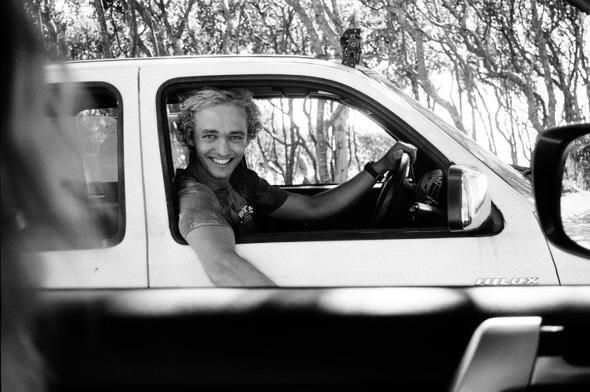
Engineering Work
My love of engineering and figuring out how things work has led me to various professions. Workng at whale tales as a marine engineer has taught me a lot about the industry and how it operates. My job included marine servicing of 400hp diesel engines, fibreglassing and repair work, routine maintenance and other related jobs.
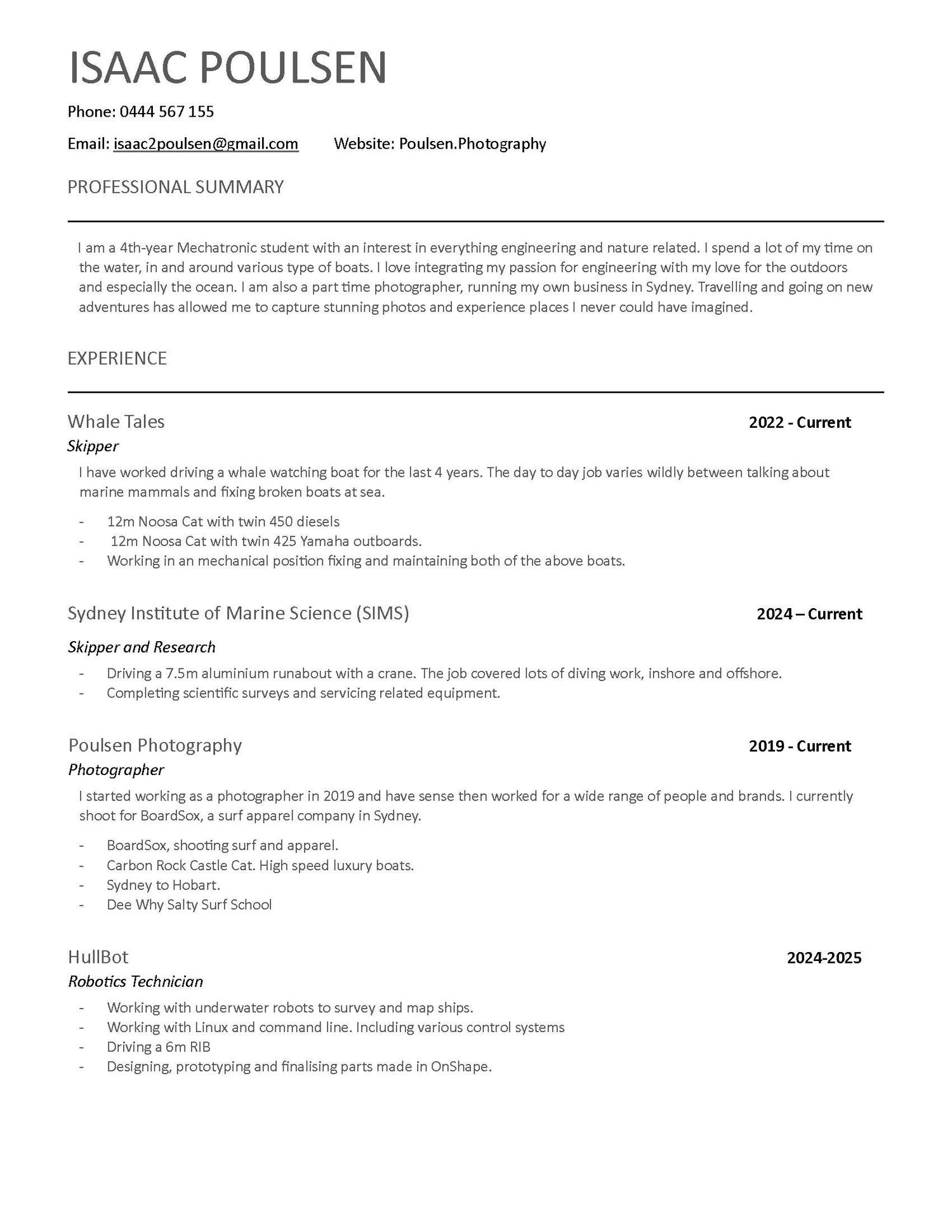
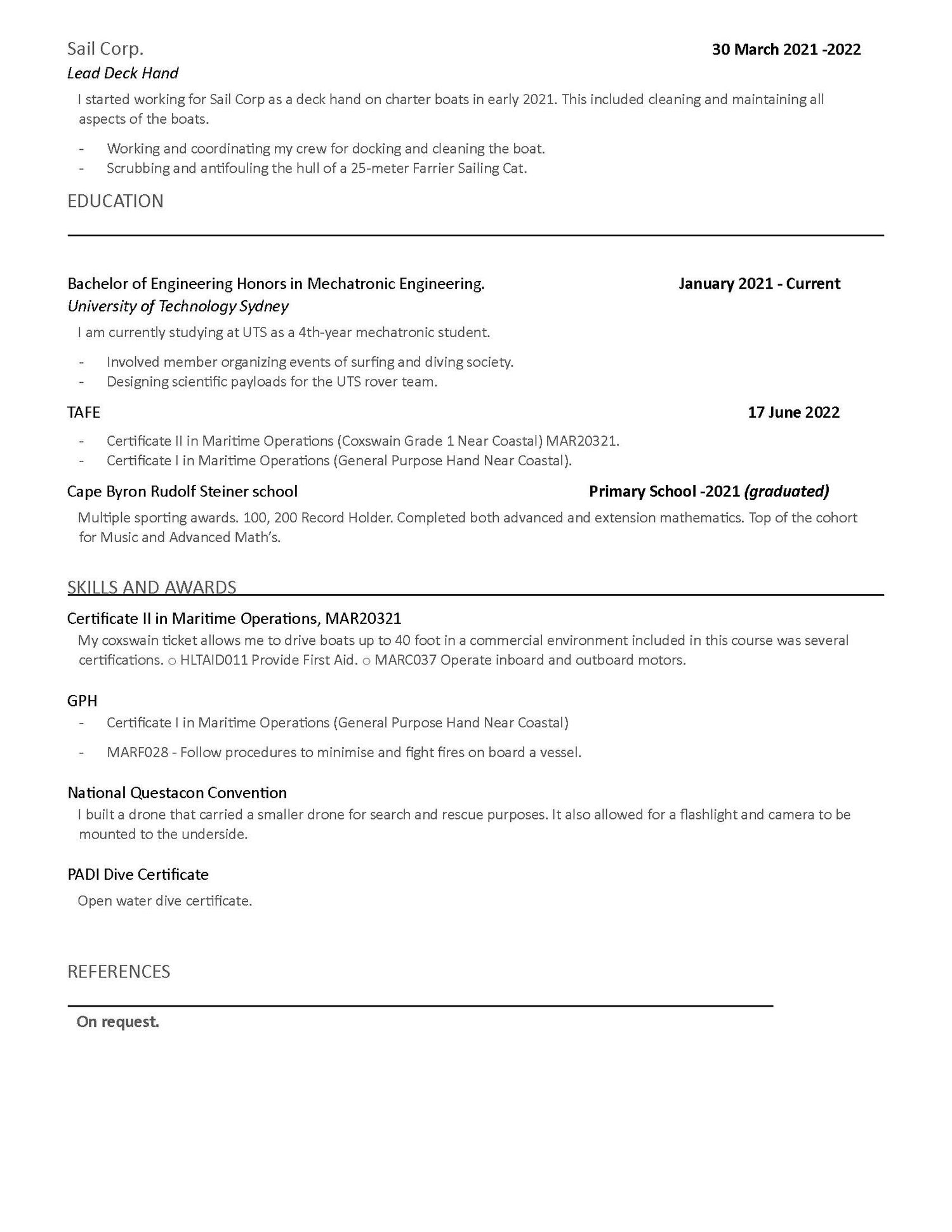
Isaac Poulsen
Sydney, NSW
isaac2poulsen@gmail.com
0444567155
29 August 2026
The Graduate Recruitment Team
Industrus Engineering
RE: APPLICATION FOR THE INDUSTRUS ENGINEERING GRADUATE PROGRAM – MECHANICAL ENGINEERING
I am writing to apply for a position in the Industrus Engineering Graduate Program. I am in the final year of a Bachelor of Engineering (Honours) in Mechanical Engineering at The University of Technology Sydney, and I expect to complete my degree at the end of this year. Industrus’ work across renewable energy storage, transport resilience and engineered timber construction is exactly the kind of varied, high-consequence engineering I want to build a career in, and the rotational structure of your program is the reason I am applying to Industrus ahead of other graduate employers.
I regularly move between technical and non-technical audiences. Through my photography business I run the client-facing side of the venture: I scope work with business owners and event organisers who have a clear idea of the outcome they want but no interest in the technical detail, translate that into a shot list and a schedule, and manage expectations when conditions change on the day. That work has taught me to lead with what the other person needs to decide rather than with the detail I find interesting.
Most of my technical development has come from projects I started myself. I designed and built a V‑tail fixed‑wing aircraft, configuring the iNav flight control firmware, tuning the control surfaces and iterating on the airframe after each test flight. I am currently designing a VTOL fuselage in Onshape, which has required me to resolve competing demands between internal component packaging, structural stiffness and aerodynamic form – a problem with no textbook answer and several defensible solutions.
The vessel dashboard project is a similar example of proactive work: I identified the need, developed the design, and researched marine-grade materials before selecting polycarbonate for its impact resistance and UV stability over the cheaper acrylic option. I am comfortable with the ambiguity of an open problem, I prototype early to test an idea rather than debating it, and I treat a failed iteration as information. That is the mindset I would bring to a rotational program where the problem changes every few months.
I am also used to workplaces where performance is directly observable. On a vessel, arriving prepared, in the right condition and on time is not a courtesy, and standards of presentation and conduct are part of the job. I actively seek feedback and act on it: several of the improvements in my aircraft builds and in my photography work came from criticism I asked for. I would enter the Graduate Program expecting to be stretched, and I would use the buddy and mentoring structure deliberately rather than waiting to be managed.
Crewed vessel operations are the clearest teamwork experience I have. Tasks such as mooring, docking and passage keeping depend on each person doing their part on time, communicating clearly and monitoring the people around them; there is no scope for working in isolation, and safety depends on any crew member being willing to speak up regardless of seniority.
I have taken on leadership where it was needed rather than where it was assigned. I co-founded my photography venture with a business partner, and we divide responsibility for client liaison, production and delivery while jointly making decisions on pricing and direction – which has meant learning to disagree productively with someone whose stake in the outcome equals mine. I have also organised a group surf camp, coordinating participants, logistics and scheduling from planning through to the event itself. My default is to contribute as a team member and support whoever is leading, and to step up when there is a gap.
I would welcome the opportunity to discuss my application further and can make myself available for an interview at your convenience. My resume is attached, and I can provide references and examples of my design work on request. Thank you for considering my application.
Yours sincerely,
Isaac Poulsen
Expectations before I joined
I expected my three months at the marine company to be narrow and desk-bound: a CAD licence, a corner of the design office, and self-contained modelling exercises that someone senior would eventually check. I assumed the engineering would be largely theoretical, and that work would run in a clean sequence — design finished, then built, then fitted.
The reality
It was messier, more physical and far more interesting. I did spend a lot of time in CAD, but the models were rarely abstract. They were tied to marine diesel engines sitting a few metres away, half stripped, with someone waiting on a bracket or a clearance check. I was in the workshop constantly — measuring components and confirming that what I had drawn actually fitted.
The biggest difference was how much of engineering is negotiation with constraints that never appear in coursework. A design is worthless if it cannot be installed in the space available, serviced with a spanner, or made from stock the company can source. Design, build and rework also happened in parallel, not in sequence.
The most important lessons
Measure and verify rather than assume — I learned this after modelling from a drawing that no longer matched the engine as built. Ask the experienced fitters early, because their tacit knowledge saves days of wasted CAD work. And treat communication as a technical skill: a drawing is only as good as the workshop's ability to build from it. Together these closed the gap between operating CAD software and producing engineering output others can actually use.
My value proposition
I can work competently in CAD and am comfortable on the shop floor around marine diesel engines — I can translate between the drawing and the physical machine. I can demonstrate this through drawings I produced that went into use, modifications I made after workshop feedback, and my ability to talk credibly about engine installation constraints.
Influence on the roles I want
The internship pushed me towards roles at the interface between design and production rather than purely at a desk — ideally in the marine sector, which I found far more engaging than I anticipated.